
Indian Knowledge Systems


AGRICULTURE
Agriculture has been the foundation of India’s civilization for thousands of years, sustaining communities, economies, and cultural traditions across the subcontinent. From ancient farming practices and irrigation systems to the cultivation of diverse crops and sustainable land management, India’s agricultural heritage reflects a profound understanding of nature and ecological balance. The study of Indian agriculture offers valuable insights into traditional knowledge, rural livelihoods, food security, and the continuing evolution of one of the world’s oldest agrarian societies.
ARCHITECTURE
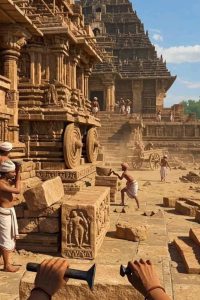
Indian Architecture is a remarkable expression of the country’s artistic vision, engineering excellence, and cultural diversity. Evolving over millennia, it encompasses temples, stupas, monasteries, forts, palaces, stepwells, urban settlements, and civic structures that reflect diverse regional styles and construction traditions. Combining aesthetics with functionality, Indian architecture continues to stand as a testament to the ingenuity, craftsmanship, and scientific knowledge that have shaped the nation’s built heritage.
ASTRONOMY
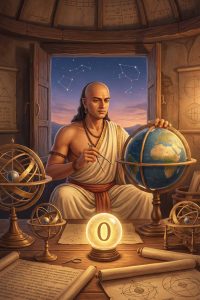
Astronomy has occupied a distinguished place in India’s scientific tradition since ancient times, contributing significantly to the study of celestial phenomena, planetary movements, calendars, and timekeeping. Indian astronomers developed sophisticated mathematical models, observational techniques, and astronomical texts that influenced scientific thought across generations. The study of Indian astronomy highlights the country’s enduring contributions to the advancement of scientific knowledge and its integration with mathematics, philosophy, and cosmology.
ECONOMICS
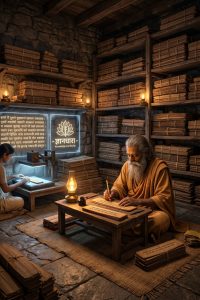
Economics in the Indian tradition encompasses the study of wealth, production, trade, resource management, taxation, public finance, and the organization of society. From ancient treatises on governance and commerce to contemporary economic thought, India’s economic heritage reflects a long history of agricultural prosperity, thriving markets, artisan guilds, maritime trade, and financial institutions. Exploring Indian economics provides valuable perspectives on the principles and practices that have influenced the nation’s development across different historical periods.
ECOLOGY
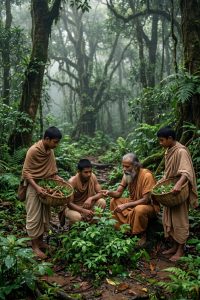
Ecology explores the intricate relationships between living organisms and their natural environment. India’s ecological heritage is reflected in its diverse ecosystems, traditional conservation practices, sacred landscapes, and centuries-old understanding of the interdependence between humans and nature. From forests, rivers, and mountains to agricultural landscapes and biodiversity, the study of ecology highlights the importance of environmental stewardship, sustainability, and the preservation of natural resources for future generations.
EDUCATION
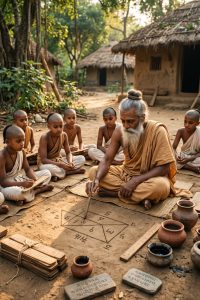
Education has been a cornerstone of India’s civilizational development, nurturing knowledge, values, skills, and intellectual inquiry across generations. From ancient centres of learning, Gurukulas, monasteries, and renowned universities to modern educational institutions, India’s educational traditions have fostered excellence in philosophy, science, mathematics, medicine, literature, and the arts. The study of Indian education reflects the nation’s enduring commitment to learning, scholarship, and the transmission of knowledge.

GOVERNANCE
Governance in the Indian tradition encompasses the principles and practices of administration, public welfare, justice, law, diplomacy, and ethical leadership that have guided societies across centuries. Preserved in historical records, inscriptions, and classical treatises, these traditions emphasize responsible leadership, institutional accountability, and the well-being of the people. The study of governance provides valuable insights into the evolution of political institutions and administrative systems that have shaped India’s historical and contemporary development.

MATHEMATICS
Mathematics has been one of India’s most distinguished intellectual traditions, contributing profoundly to the development of arithmetic, algebra, geometry, trigonometry, and numerical systems. Indian scholars pioneered concepts and methods that transformed mathematical thought and influenced scientific progress across the world. The study of Indian mathematics celebrates a rich legacy of innovation, logical reasoning, and scholarly excellence that continues to inspire research and education today.

METALLURGY
Metallurgy has been a hallmark of India’s technological and scientific achievements since ancient times. Indian artisans and metallurgists developed advanced techniques for extracting, refining, alloying, and crafting metals such as iron, steel, copper, bronze, gold, and zinc, producing objects renowned for their quality and durability. From monumental structures and tools to coins, weapons, and works of art, India’s metallurgical heritage reflects remarkable innovation, craftsmanship, and scientific understanding.

PSYCHOLOGY
Psychology in the Indian tradition explores the nature of the mind, consciousness, emotions, behaviour, and human well-being through philosophical, spiritual, and scientific inquiry. Drawing upon diverse knowledge systems, it examines mental processes, self-awareness, ethical conduct, and the cultivation of emotional balance as essential aspects of holistic living. This rich intellectual heritage continues to offer valuable perspectives on human behaviour, resilience, mental health, and personal growth in the modern world.

WATER MANAGEMENT
Water Management has been an essential aspect of India’s civilizational development, reflecting centuries of innovation in conserving, storing, distributing, and sustainably utilizing water resources. From stepwells, tanks, canals, and reservoirs to sophisticated irrigation systems and traditional rainwater harvesting techniques, Indian communities developed remarkable solutions adapted to diverse landscapes and climatic conditions. The study of water management highlights the nation’s enduring legacy of environmental stewardship, engineering ingenuity, and sustainable resource management.