
Economics & Trade

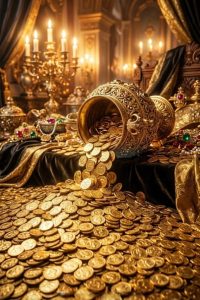
ANCIENT ECONOMY
The Ancient Economy of India reflects a sophisticated system of agriculture, trade, craftsmanship, taxation, and commerce that evolved over thousands of years. From the urban centres of the Indus Valley Civilization to the flourishing kingdoms and empires of the classical period, economic activity was supported by organized markets, guilds, coinage, long-distance trade, and well-developed administrative systems. Ancient Indian economic thought, preserved in literary, archaeological, and epigraphic sources, continues to provide valuable insights into the foundations of one of the world’s oldest civilizations.
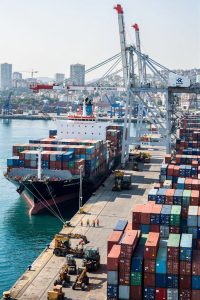
MARITIME TRADE
Maritime Trade has played a pivotal role in India’s economic and cultural history, connecting the subcontinent with civilizations across Asia, Africa, the Middle East, and Europe for millennia. Supported by an extensive coastline and thriving ports, Indian merchants exchanged textiles, spices, precious stones, metals, medicinal products, and other valuable commodities through vast sea routes. These maritime networks not only fostered economic prosperity but also facilitated the exchange of ideas, technologies, religions, and cultural traditions across the ancient and medieval world.

MODERN ECONOMY
India’s Modern Economy is a dynamic and rapidly evolving system driven by agriculture, manufacturing, services, technology, entrepreneurship, and global trade. As one of the world’s largest economies, it reflects the combined strength of traditional industries and emerging sectors, supported by innovation, infrastructure, digital transformation, and a growing consumer market. Understanding the modern Indian economy provides valuable insights into the country’s economic development, policy evolution, business environment, and its expanding role in the global economy.
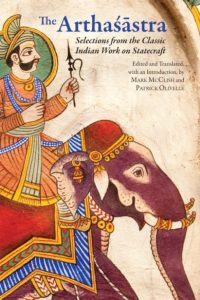
STATECRAFT
Statecraft in the Indian tradition encompasses the principles of governance, public administration, diplomacy, law, taxation, defence, and economic management that guided kingdoms and empires across centuries. Preserved in classical treatises, inscriptions, and historical records, these ideas emphasize ethical leadership, social welfare, justice, and effective administration as essential responsibilities of the state. From ancient political philosophy to practical governance, India’s rich traditions of statecraft continue to offer valuable perspectives on leadership, public policy, and nation-building.
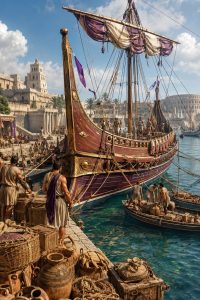
TRADE ROUTES
Trade Routes formed the lifelines of India’s economic and cultural exchanges, linking cities, ports, kingdoms, and distant civilizations through extensive networks of land and sea. These routes enabled the movement of goods such as spices, textiles, precious stones, metals, horses, and medicinal products while also facilitating the exchange of knowledge, technologies, artistic traditions, languages, and religious ideas. Their enduring legacy illustrates India’s central role in regional and global commerce across ancient and medieval history.
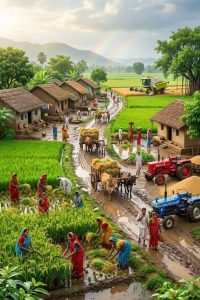
VILLAGE ECONOMY
The Village Economy has long been the foundation of India’s social and economic life, sustaining communities through agriculture, animal husbandry, traditional crafts, local trade, and cooperative systems. Historically, villages functioned as largely self-reliant units supported by skilled artisans, cultivators, merchants, and service providers whose livelihoods were interconnected through local exchange and community institutions. The study of India’s village economy offers valuable insights into rural development, traditional livelihoods, sustainable practices, and the enduring resilience of local economic systems.