
Archaeology

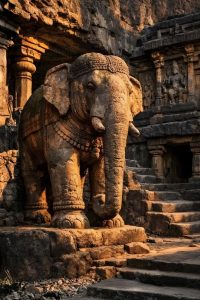
ANCIENT SITES
India’s ancient sites are living testimonies to one of the world’s oldest and most enduring civilizations. They include archaeological ruins, ancient cities, temples, monasteries, forts, caves, stupas, rock-cut monuments, inscriptions, and sacred landscapes that reflect the country’s rich cultural, spiritual, scientific, and architectural heritage. Dating back thousands of years—from the Indus Valley Civilization to the great dynasties of ancient and medieval India—these sites preserve the legacy of India’s history, traditions, and knowledge systems. They continue to inspire scholars, pilgrims, travellers, and heritage enthusiasts from across the world.

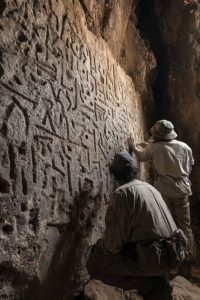
EPIGRAPHY
Epigraphy is the study of inscriptions engraved on durable materials such as stone, metal, terracotta, wood, and other enduring surfaces. In India, inscriptions serve as invaluable historical records, preserving details of royal proclamations, religious traditions, administrative systems, social life, languages, scripts, and cultural developments across millennia. From the earliest Brahmi and Kharosthi inscriptions to medieval temple records and copper-plate grants, Indian epigraphy provides direct evidence of the nation’s rich civilizational journey, enabling historians and researchers to reconstruct its political, cultural, and intellectual heritage with remarkable authenticity.
.
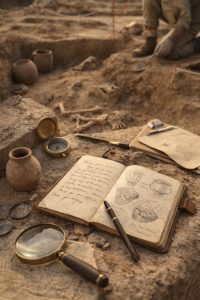
EXCAVATIONS
Excavations are the systematic archaeological exploration of sites that uncover the physical remains of past civilizations buried beneath the earth. In India, archaeological excavations have revealed ancient cities, settlements, temples, forts, burial sites, artifacts, inscriptions, coins, pottery, sculptures, and everyday objects that offer invaluable insights into the country’s cultural, social, and technological evolution. From the cities of the Indus Valley Civilization to medieval urban centres, these discoveries continue to deepen our understanding of India’s remarkable civilizational heritage and the lives of the people who shaped it across thousands of years.
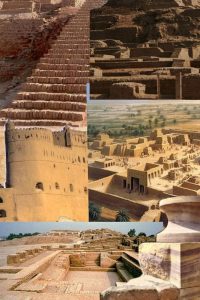
HARAPPAN CIVILIZATION
The Harappan Civilization, also known as the Indus Valley Civilization, was one of the world’s earliest and most advanced urban civilizations, flourishing across the northwestern regions of the Indian subcontinent over 4,000 years ago. Renowned for its well-planned cities, sophisticated drainage systems, standardized craftsmanship, extensive trade networks, and remarkable achievements in architecture and urban planning, the civilization reflects an extraordinary level of social and technological development. Its cities, artifacts, seals, pottery, and inscriptions continue to provide invaluable insights into the origins of India’s ancient civilizational heritage and remain a subject of ongoing archaeological research and discovery.

MATERIAL CULTURE
Material Culture encompasses the tangible objects created, used, and preserved by human societies that reflect their way of life, beliefs, technologies, and artistic traditions. In the context of India, it includes artifacts such as pottery, tools, ornaments, sculptures, coins, textiles, ceramics, weapons, household objects, architectural remains, and ritual items discovered through archaeological research and historical records. These physical remains provide invaluable evidence of India’s social, economic, cultural, and technological evolution, offering a deeper understanding of the everyday lives, craftsmanship, and achievements of its diverse civilizations across millennia.

NUMISMATICS
Numismatics is the study of coins, currency, medals, and other monetary objects that provide valuable insights into the economic, political, cultural, and artistic history of civilizations. In India, coins issued by ancient kingdoms, empires, republics, and regional dynasties serve as important historical sources, revealing information about rulers, trade, religion, languages, scripts, iconography, and evolving monetary systems. From the earliest punch-marked coins to the exquisite coinage of later dynasties, Indian numismatics offers a fascinating window into the nation’s rich civilizational legacy and its long tradition of commerce, governance, and cultural exchange.
TEMPLE ARCHAEOLOGY
Temple Archaeology is the study of ancient and historical temples through archaeological methods, historical research, architecture, inscriptions, sculptures, and material evidence to understand their origin, evolution, and cultural significance. In India, temples are not only places of worship but also repositories of art, architecture, literature, science, and social history. Archaeological investigations of temple sites reveal valuable insights into the religious traditions, architectural styles, patronage, craftsmanship, iconography, and regional cultures that flourished across different periods. Together, they illuminate the enduring role of temples in shaping India’s civilizational, spiritual, and artistic heritage.