Caste has been an important aspect of India’s social history and continues to be a subject of extensive scholarly inquiry across disciplines such as sociology, anthropology, history, and political science. The study of caste examines its historical evolution, social organization, cultural practices, economic dimensions, and changing role in contemporary society. By exploring diverse perspectives and regional contexts, it provides valuable insights into the complexities of India’s social structure and its ongoing transformation.
Customs are the traditional practices, social conventions, and cultural expressions that shape the everyday lives of communities across India. Passed down through generations, they reflect regional identities, shared values, family life, ceremonies, festivals, and community interactions. The study of customs offers valuable insights into India’s diverse cultural traditions and the ways in which they have evolved while preserving continuity with the past.
Ethnography is the systematic study and documentation of people, communities, and cultures through observation, fieldwork, and lived experience. In the Indian context, it explores the customs, beliefs, social institutions, livelihoods, languages, rituals, and everyday practices of the country’s diverse communities. Ethnographic studies provide a deeper understanding of India’s cultural diversity while preserving valuable knowledge about its social and anthropological heritage.
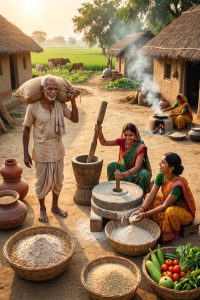
Rural India represents the social, cultural, economic, and agricultural foundations of the nation, encompassing thousands of villages that have sustained India’s civilization for centuries. Characterized by diverse traditions, local knowledge systems, community institutions, and agrarian livelihoods, rural life reflects both continuity and change in response to evolving social and economic conditions. The study of Rural India offers valuable perspectives on village society, development, culture, and the enduring resilience of rural communities.
Tribal Studies explores the history, cultures, languages, traditions, livelihoods, knowledge systems, and social institutions of India’s Indigenous and tribal communities. Drawing upon anthropology, sociology, history, archaeology, and cultural studies, this field examines the rich diversity of tribal societies and their unique contributions to India’s civilizational heritage. It also provides insights into contemporary issues relating to identity, conservation, development, and cultural preservation.
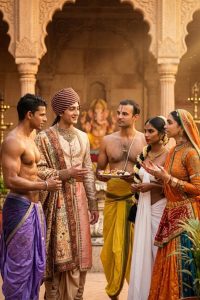
Urban India examines the evolution and character of cities and towns as centres of administration, commerce, culture, education, and innovation. From the planned cities of ancient civilizations to the rapidly growing metropolitan regions of modern India, urban centres have played a pivotal role in shaping the nation’s economic, social, and cultural development. The study of Urban India explores themes such as urban planning, governance, migration, infrastructure, heritage, and the changing dynamics of city life.
India has countless stories to tell. We’re just getting started.
India has over 5,000 years of stories, traditions and craftsmanship. Bringing them together is a journey—and we’re delighted that you’re joining us from the very beginning.
Because India’s treasures are vast and thoughtfully curated, our collection will continue to grow every single day. New products, new collections and new discoveries are being added regularly from different parts of the country.
We invite you to return often—there will always be something new waiting to be discovered.
Thank you for being among the first to begin this journey with us.