Civilizational Studies is an interdisciplinary field that explores the origin, evolution, achievements, and enduring legacy of human civilizations across time. Drawing upon history, archaeology, literature, philosophy, religion, art, science, and cultural traditions, it seeks to understand how societies develop, interact, and shape the course of human history. In the Indian context, civilizational studies offer a comprehensive perspective on one of the world’s oldest continuous civilizations, highlighting its enduring contributions to knowledge, culture, governance, spirituality, and global heritage.
Comparative Civilizations examines the historical, cultural, intellectual, and social development of different civilizations to better understand their distinctive characteristics, shared experiences, and mutual influences. Through the comparative study of governance, philosophy, religion, science, art, economy, and cultural institutions, this field fosters a deeper appreciation of humanity’s diverse civilizational traditions. It provides valuable insights into India’s place within the broader history of world civilizations and its interactions with cultures across the globe.
Indian Intellectual Traditions encompass the vast body of philosophical, scientific, literary, linguistic, artistic, and spiritual thought that has evolved across the Indian subcontinent over thousands of years. Preserved through oral traditions, classical texts, scholarly commentaries, and educational institutions, these traditions have shaped disciplines ranging from logic, mathematics, medicine, and astronomy to ethics, aesthetics, linguistics, and metaphysics. They continue to inspire scholarship and contribute to contemporary understanding of India’s rich civilizational heritage.
Indian Knowledge Systems (IKS) comprise the diverse bodies of knowledge, practices, and methodologies that have been developed in India across millennia through sustained observation, inquiry, experience, and scholarly tradition. Encompassing fields such as philosophy, Ayurveda, Yoga, mathematics, astronomy, architecture, agriculture, governance, metallurgy, linguistics, ecology, and the arts, these knowledge systems reflect an integrated approach to understanding the natural world, society, and human well-being. Their study offers valuable insights into India’s scientific, cultural, and intellectual legacy while fostering meaningful dialogue with contemporary disciplines.
Oriental Studies is an interdisciplinary field dedicated to the study of the languages, literature, history, philosophy, religions, cultures, and civilizations of Asia, with particular emphasis on the classical traditions of the East. Within the Indian context, it encompasses the scholarly exploration of Sanskrit and other classical languages, ancient texts, archaeology, epigraphy, manuscripts, religious traditions, and intellectual heritage. By bringing together diverse academic disciplines, Oriental Studies contributes to a deeper understanding of India’s place within the broader cultural and civilizational landscape of Asia.
India has countless stories to tell. We’re just getting started.
India has over 5,000 years of stories, traditions and craftsmanship. Bringing them together is a journey—and we’re delighted that you’re joining us from the very beginning.
Because India’s treasures are vast and thoughtfully curated, our collection will continue to grow every single day. New products, new collections and new discoveries are being added regularly from different parts of the country.
We invite you to return often—there will always be something new waiting to be discovered.
Thank you for being among the first to begin this journey with us.




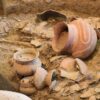 Archaeology
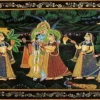 Art
Art
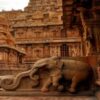 Indian Architecture
 Indian Philosophy
 Literature of India
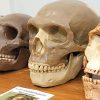 Society & Anthropology
 Temple Architecture